
Jacob Beaton shares his low-cost path to Indigenous food sovereignty in BCHC webinar
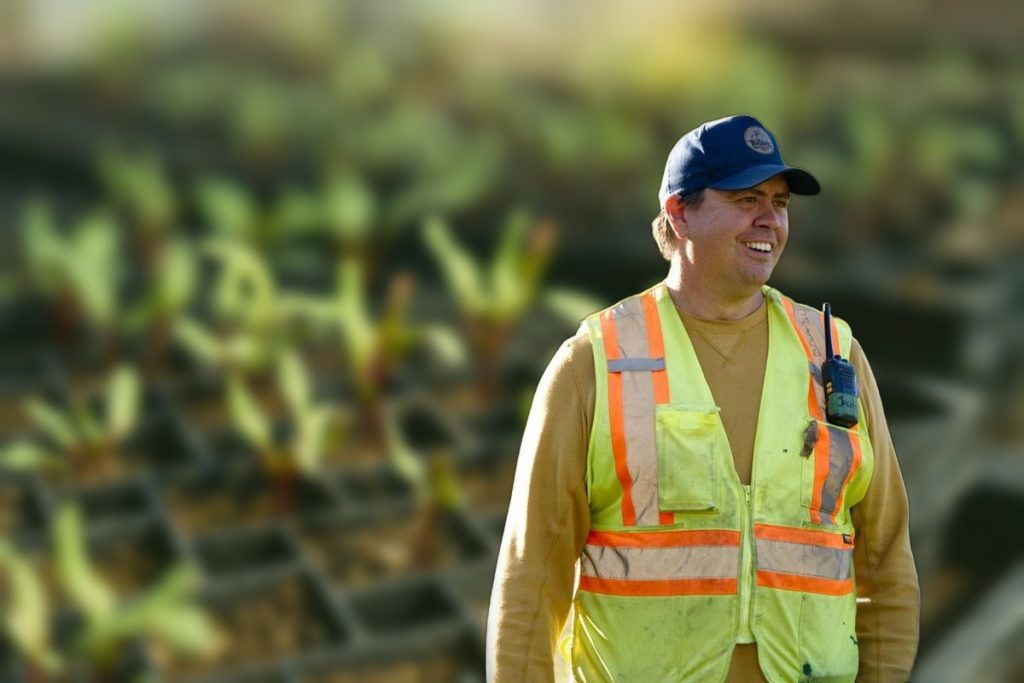
The Tea Creek founder told a PlanH webinar audience that clear goals, native soil and funding from outside agriculture matter more than greenhouses and gadgets.
Indigenous communities working toward food sovereignty should start with clear goals and the land they already have, Tea Creek founder Jacob Beaton told more than 100 people at a PlanH webinar on Nov. 26.
Beaton and his family bought a 140-acre homestead near Kitwanga in Gitxsan territory in 2018. Today Tea Creek is an Indigenous-led farm and skilled-trades training centre that grows 20,000 to 35,000 pounds of produce a year for free community distribution.
“Food sovereignty, it is about feeding people,” Beaton said. “But it’s much more than that. It’s about land rights. It’s about cultural rights. It’s about valuing people as human beings and the knowledge that they carry.”
He urged listeners not to confuse it with food security. Food security is a goal, he said: how do we feed everybody? Food sovereignty is the set of values and priorities that gets a community there.
‘Our past is our future again’
Beaton said First Nations were successful farmers and food producers before the Indian Act and other policies systematically dismantled their food systems. More than three-quarters of the food grown for people around the world today was first domesticated by Indigenous peoples of the Americas, he noted, yet Indigenous people make up less than half of one per cent of food producers in Canada and the United States.
He pushed back on the idea that B.C. is poorly suited to growing food. “I hear a lot of non-Indigenous people who are working for First Nations saying, ‘Oh, we’re in the north, we can’t grow food,’” he said. Every Indigenous culture in what is now B.C. was built on productive local food systems, from forests and rivers to the ocean, he said.
Set a target, then pick your tools
Beaton suggested a practical test: if your community was cut off by a washout or wildfire, how much food could you produce? Canadians eat about 900 kilograms of food per person each year, he said, which gives communities a starting target.
He warned against buying equipment first. “There’s a grant for a greenhouse. I’ll buy a greenhouse and then I’ll try and figure out what to do with it,” he said. “That’s the cart before the horse.”
Some goals don’t mix, he added. Training people slows production: one garden-bed task took 20 times longer with trainees than with experienced staff. Personal garden plots and shared community fields also clashed at Tea Creek, because people want different things from each.
Keep costs low
Beaton’s strongest advice was to grow in native soil. He calculated that raised beds and containers cost at least 18 times more per square foot than in-ground growing. Growing one potato plant in a store-bought container can cost more than $30, he said, for about five pounds of potatoes worth a few dollars.
“That is what food sovereignty is, folks,” he said. “It’s use what you have and try not to create dependency on outside materials and suppliers.”
He was skeptical of hydroponic shipping containers, which he said can cost more than half a million dollars each. One First Nation told his association it spent more on electricity for its container than it would on buying the vegetables. He suggested starting with berries, vegetables and traditional crops such as potatoes before moving to animals, which need daily care.
Follow the money outside agriculture
Agriculture is one of the lowest-funded sectors in B.C., Beaton said, so Tea Creek looks to health, education, social development, child and family services and economic development budgets. Its longhouses, for example, were funded through social development and language and culture programs.
During the question period, Beaton said funding policies still put First Nations at a disadvantage. These included a provincial food hub stream that offered First Nations applicants far less for a feasibility study than the mainstream program, and reimbursement-only grants that leave groups waiting months for their money. Policy fixes are often “stroke of the pen fixes,” he said, and what Tea Creek wants is fair funding.
He also encouraged communities to share food through the gift economy. Tea Creek sends vegetables to coastal nations, who send seafood in return. And he said a resilient food system needs many people, each focused on what they do best, working together.
Watch the webinar
Beaton’s Indigenous Food Sovereignty Association offers support and membership to First Nations food projects. To learn more about Tea Creek, visit teacreek.ca or watch the documentary Tea Creek on CBC Gem.