
How Abbotsford turned pharmacy counters into a lifeline for older adults facing extreme heat
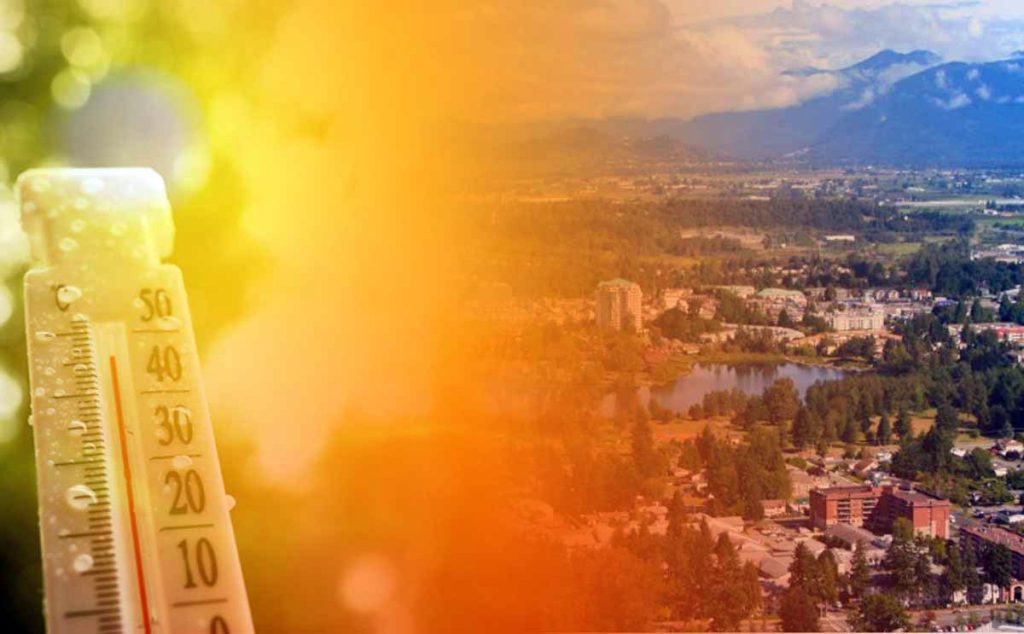
In the summer of 2021, a heat dome settled over the Fraser Valley and refused to lift. Temperatures climbed past 40C for days on end, and across British Columbia hundreds of people died, many of them older adults living alone who had no way of recognizing the warning signs until it was too late. In Abbotsford, that loss stayed with staff at the City long after the heat finally broke.
Three years later, they turned that memory into a plan: get heat and emergency preparedness information into the hands of the older adults least likely to encounter it anywhere else. Not through a seniors’ centre or a stack of pamphlets in a city hall lobby, but somewhere almost every older adult in Abbotsford already goes – the pharmacy counter.
Meeting older adults where they already go
“With many seniors in our community succumbing to the 2021 heat dome, we hoped that more seniors had the information they needed to make good heat preparedness decisions,” said Federspiel, who led the Abbotsford Heat and Emergency Preparedness Outreach Project.
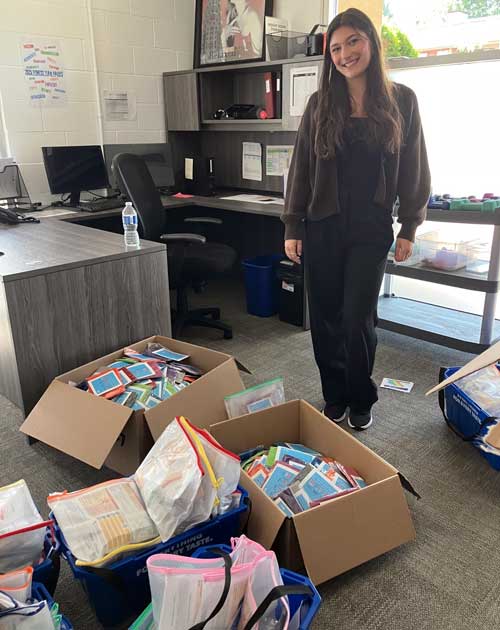
With support from an Age-friendly Communities (AFC) grant through BC Healthy Communities, the City assembled 500 “Beat the Heat” kits and placed them in 25 local pharmacies. Each kit paired a plain-language information sheet with practical tools: a fan, a cooling towel, a water bottle and a combined humidity and temperature reader. Because a heat dome doesn’t wait for a translator, the materials went out in English, Punjabi and Korean.
Distribution map
The distribution map was deliberate. The team targeted neighbourhoods with fewer socio-economic resources and higher concentrations of older adults, and made sure every kit was free. “Without the grant this information dissemination would not have been possible,” Federspiel said.
Getting the pharmacies on board took more legwork than a mass email. “Connecting with pharmacies personally (not just through email) worked well,” Federspiel said. What surprised the team was who said yes first. “Many of the smaller pharmacies were more interested to participate than larger ones,” she said – a pattern that has reshaped how she thinks about outreach in the future. “Small communities could consider partnering with pharmacies to distribute resources to reach harder to connect with seniors. With large pharmacies we found it difficult, but smaller ones with a neighbourhood focus were very excited to participate with us in the work.”
Leveraging partnerships
The project also pulled in partners beyond the pharmacy counter. City recreation and emergency services staff, private businesses and a faith institution all joined as new partners, while existing ties deepened with Fraser Health, Archway Community Services and Abbotsford’s Seniors Resource group, where the project became a regular agenda item. “Having a project with mutual goals across many areas helped us to work together to build trust,” Federspiel said. Fraser Health, for its part, reviewed the heat information flyer for accuracy and translation and is now developing a pharmacist learning module on counselling seniors about heat risk and medications.
Federspiel credits some of that momentum to BC Healthy Communities’ Community of Practice calls, where grantees across the province compared notes. “Collaborating and meeting others doing similar work in other communities is helpful in providing feedback, garnering ideas for future and current projects, as well as motivation and celebrating successes,” she said. Her advice to other communities considering a similar project is straightforward: “Working with BCHC is great, and we suggest taking advantage of their resources and knowledge will help immensely with your projects and age friendly plans and assessments.”
Lessons learned
One lesson from the project stands out to Federspiel as worth repeating to any community planning for extreme heat: “Humidity is an important factor in heat emergencies, not just temperature, and that is an important message for everyone.”
The ripple effects are still showing up. Several older adult organizations in Abbotsford have since asked the City to run the project again – and have offered to buy the heat kits themselves to distribute to their own members, an outcome Federspiel calls an unintended but welcome consequence. Some of the participating pharmacies now want to take part in Seniors Week activities too.
For a city that lost residents to the last heat dome, that’s the point: information that used to stop at the pharmacy door is now travelling further, in more languages, to the older adults who need it most – well before the next heat wave arrives.