
Vernon is rewriting the map for older adults and dementia caregivers
Finding your way around town might seem simple – but for older adults and those living with dementia, confusing signage and poorly designed streets can make the difference between independence and isolation.
Vernon is doing something about it.
The City has launched a community-wide wayfinding strategy, reviewing its public signage from the ground up – looking at accessibility, readability and how well the city’s built environment helps people navigate their daily lives. It’s one of the most visible outcomes yet of Vernon’s Age- and Dementia-Friendly Community Plan (A&D Plan), which lays out five strategic directions: City Places & Spaces, Housing & Transportation, Community Support & Health Services, Communication & Information and Social Inclusion.



Last fall, a council-supported Memory Café during Vernon Cultural Days offered a glimpse of what age-friendly community-building looks like in practice – a welcoming space for people living with dementia and their caregivers to connect and belong.
But the bigger shift is structural. Vernon’s newly adopted Official Community Plan has woven the A&D Plan’s priorities into the city’s long-term blueprint – meaning every new building, sidewalk, and public space will be shaped by these principles going forward.
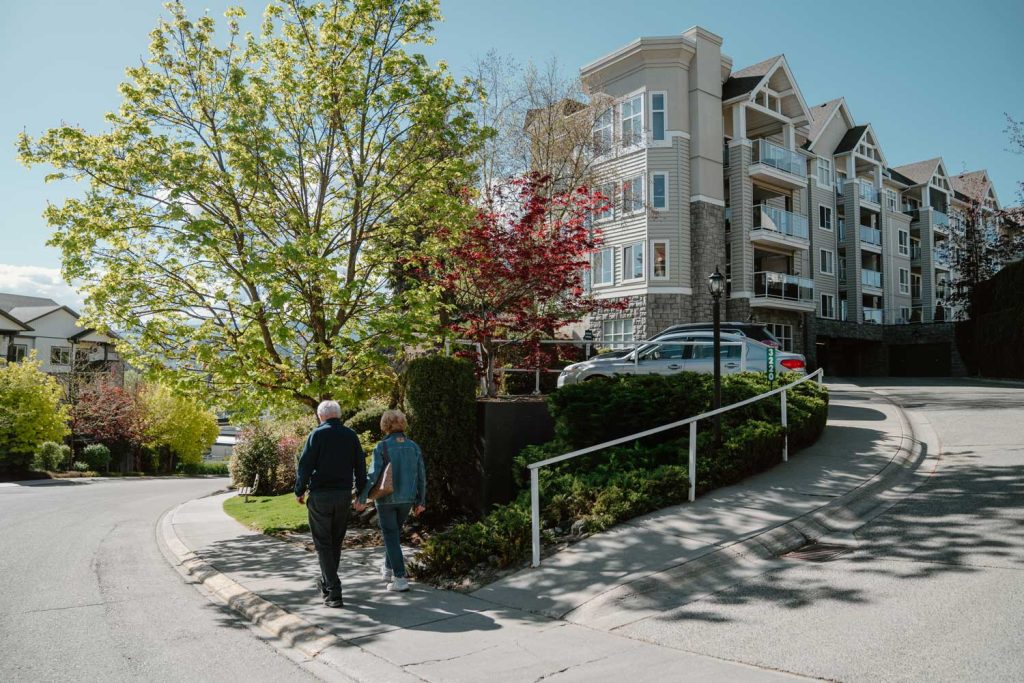
“The greatest improvement we will achieve over time is through the design of buildings in our centres as they redevelop,” says Trisa Atwood, the City’s Manager of Community Planning & Sustainability. Pedestrian-friendly streets, distinctive corner architecture to help people orient themselves, accessible housing, and inclusive public spaces are all part of the vision.
The OCP itself was built to model what it preaches — written in plain language, set in accessible fonts, and illustrated with imagery that portrays older adults with dignity and respect.
Vernon isn’t waiting for a perfect plan. It’s building one, street by street and block by block.