
Cranbrook’s ‘less talk, more action’ builds foundation for stronger collaboration
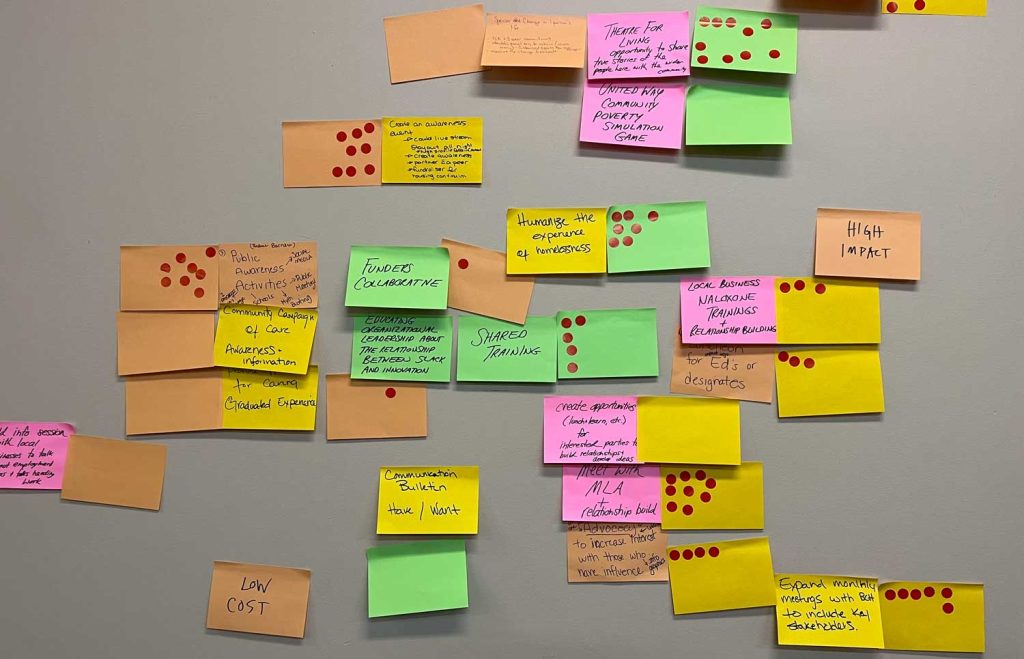
In Cranbrook, a simple idea – “Less Talk, More Action” – sparked a meaningful shift in how local organizations connect, collaborate, and plan for the future. Supported by a $5,000 provincial BC Healthy Communities (BCHC) Community Connectedness Grant, the City of Cranbrook set out to identify community priorities, map social assets and establish better systems for working together.
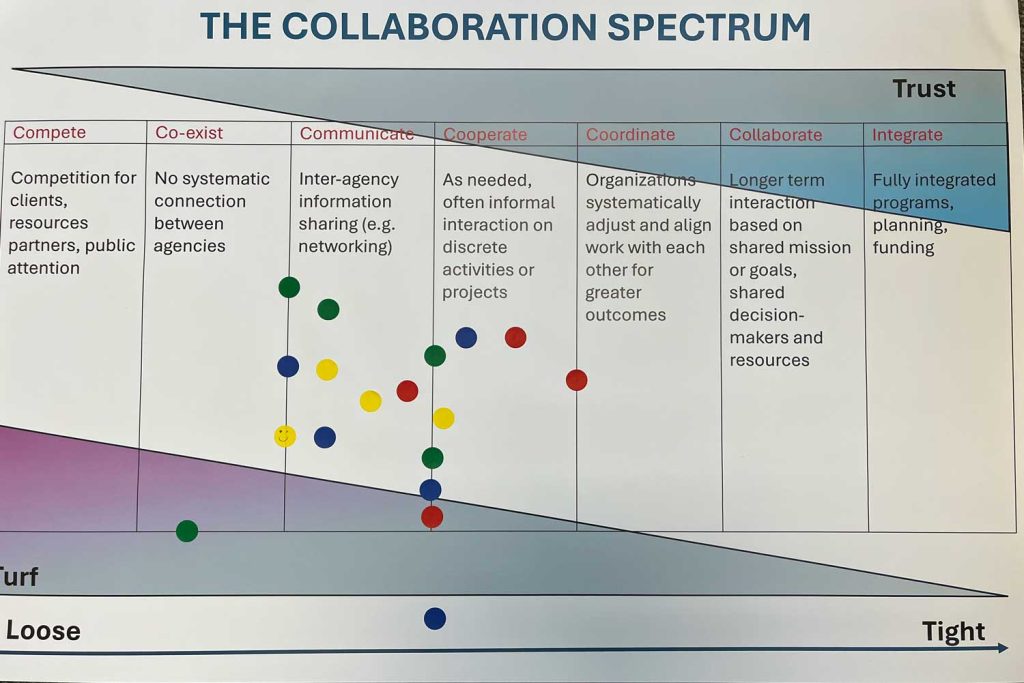
For Social Development Coordinator Marcel Germer, who led the initiative, the turning point came when the city recognized that its strong social network was still functioning between the “communicate” and “cooperate” stages of collaboration.
“The event itself was very helpful,” said Germer. “It brought together a wide range of service providers and opened the door to talking about what ‘collaborative practice’ means to us as service providers, where we currently feel we sit on the collaborative practice scale, and provided a safe space to talk about real and current barriers to working collectively.”
That sense of candour became the hallmark of the project. Collaboration in small, rural communities can be challenging. Staffing shortages, limited resources and competition for funding often create deep-rooted barriers. The Less Talk, More Action event broke through some of those walls by inviting service providers to speak openly about the systemic issues they face – and the shared goals that unite them.
Fresh perspectives spark honest dialogue
An outside facilitator, new to the community, helped spark these honest discussions. For a town used to hearing from familiar voices, the fresh perspective was invigorating.
“Having an unknown presenter from outside the community not only introduced a fresh viewpoint,” Germer explained in her report, “but it also allowed for some honest feedback on how our community is perceived from an external view.”
The event’s structure also ensured equity and inclusion were front and centre. Smaller and less-visible organizations were deliberately invited to the table, ensuring they had equal opportunity to contribute. This inclusive approach helped uncover common priorities and created a deeper sense of shared ownership.
While the gathering itself lasted only a day, its impact continues to ripple through Cranbrook’s social service community. The process of surfacing barriers, building trust and mapping priorities gave local organizations a foundation to move beyond dialogue and toward concrete collaboration.
From conversation to collective action
“But more importantly,” said Germer, “it laid a solid foundation of understanding that helped us be successful for a large Health Canada grant we later applied for. Because we had engaged in some of the challenging conversations as a part of the PlanH project, identified some community priorities, and were addressing some of the barriers, we were well positioned to take a step forward on a collective project.”
That follow-up Health Canada grant has since allowed Cranbrook to continue strengthening partnerships across health, non-profit and faith sectors. Germer believes the groundwork laid through BCHC’s support was essential to that success.
The project also helped reframe how local organizations view connectedness. By stepping back to understand where they stood on the collaboration spectrum, Cranbrook’s service providers recognized that lasting change comes from ongoing dialogue and shared accountability – not just good intentions.
“It’s hard to be a healthy community when your social network is overwhelmed, under-resourced and struggling with staffing shortages,” Germer noted in her final report. “Accessing the resources on the PlanH website provided direction on how to support the network and offered some ideas on how to structure the project to begin building trust.”
Laying the groundwork for long-term trust
That trust has become Cranbrook’s most valuable asset. The relationships strengthened through the event are continuing to evolve into partnerships that share resources, coordinate efforts, and look for collective solutions to social challenges.
For Germer, the takeaway is clear: collaboration is not a one-time event but a continuous process of learning, listening, and aligning. “Building connectedness is key in managing the complex social issues communities are facing,” she reflected. “The historical patterns of competing, working in silos and providing charity instead of equity no longer work.”
The Less Talk, More Action project lived up to its name – turning conversation into commitment and helping Cranbrook move one step closer to becoming a community that is truly, and deeply, connected.